Friday, October 30, 2015

Birthday 1975 Time Machine

70s fashion and music on "Soul Train"

The era I was born into is full of interesting differences when compared to the technology, laws and rights we enjoy today. By discussing the contrasts between then and now, I'd like to help you visualize the way the world looked the day that I was born.


The weather that day was warm, with a high of 82 degrees. I weighed 9 lbs. 11 oz. but we lost most of my baby pictures in a house fire when I was a toddler. Photographs back then were printed objects instead of digital copies, so if the original got lost you were out of luck.

Me, a puppy, my dad and the ugliest plaid 70s couch ever
The 70s was a pretty different place. As you can see from these pictures, there was a lot of polyester and plaid being worn. People called each other using landlines instead of cellphones. No seatbelt laws existed and the drinking age in Texas was 18. Smoking was even  allowed in airplanes and the hospital where I was born. Plus, no rewind or delete keys meant you had to pay closer attention with technology.


Source: Texas Monthly magazine. May 1975

Coin operated telephone booths were on almost every corner, and you had to write contact numbers into address books. People had jobs at answering services, because there was no voice mail. In my grandmother’s rural neighborhood, she still shared a “party line” with the others who lived on her street on the day I was born. This meant everyone on your street had to take turns with everyone on the street sharing just one phone line (plus you could secretly listen in on your neighbors conversations if you were naughty). When my grandmother got the call about my birth, her neighbors’ phones rang too. Compared to today when you can post a birth notice online and tell the world instantly that mommy and baby were safe with a few posts to social media, back then it took quite a few phone calls.

Mia demonstrates how a coin operated rotary dial phone booth works in the first minute of this video.

The first desktop sized computers came out in 1975 and at first were kits that did not include a mouse or have the ability to network. No point and click usage meant learning text based operation instructions. You saved onto a clunky cassette tape. The only way to share data was to physically give your tape to another user in person or by mail. This is worlds away from today's external hard drives and online networking.


In fact, most data crunching was still done in 1975 by businesses on punch card computers for accounting and categorical data until the mid-80s. These machines were basically analog, mechanical calculators being used for data. Big data was kept in filing cabinets instead of external hard drives. After I was born, my mom took a job at a tax processing place as a key punch computer operator. 1975 was right around the time pinball machines gave way to video games, punch card machines transitioned to desktop PCs, and women like my mom left the home to work in record numbers.


My mom was a housewife on the day I was born, which was pretty common at the time. “Fewer than one in three (28.7 percent) children now have a stay-at-home parent, compared to more than half (52.6 percent) in 1975” (Glynn 2012). Women’s right advocate Betty Frieden helped encourage this change and won the Humanist of the Year award in 1975, which honored her career, as the creator of lobbyist group the National Organization for Women (NOW) and the writer of the groundbreaking book on feminism, The Feminine Mystique. “She called for women’s self-assertion, for women’s equality in the workplace and in the home. By defining women’s problems as broad and structural rather than personal, she has been credited with getting women to understand their position in society” (Kaplan, 2009). In fact in the year I was born, married women in this state had only been able to legally own property for a mere 8 years through the "Texas Marital Property Act". The 70s was a time of major transition for women’s rights in America.


But on my birthday in 1975 my mom was still at home baking cookies and trying to figure out how to feed a household on only one check from my dad.  Most of our socializing was done at church and our entertainment came from tv. In fact, my mom wanted to name me Suzanne after a classmate. My father only agreed because the name was shared by an actress he liked that played the wife on the "Bob Newhart Show," named Suzanne Pleshette (TV Guide, 1975).


Source: TV Guide, May 31, 1975 Cover featuring Bob Newhart and Suzanne Pleshette

In 1975, televisions were wired to huge antennas that strapped to the roof of your house. This was a huge setup compared to the tiny screens on wireless devices most people watch video programming on now. On the morning I was born most kids in Dallas watched the locally produced Mr. Peppermint and his little puppet friend Muffin the raccoon, who were shown from 1961-1998 (Mr. Peppermint, 2011). Low budget and lower tech, the show even used local kids because it was filmed at the WFAA station in downtown Dallas every weekday morning.

Muffin gets Fuzzy on Mr. Peppermint

On the week my mom gave birth to me, the tv was full of shows you might recognize like: M*A*S*H, Good Times, Starsky and Hutch, All in the Family, and Mary Tyler Moore. My parents preferred watching Hawaii Five-O, Little House on the Prairie, and comedienne Carol Burnett (Ingram, n.d.). Johnny Carson hosted The Tonight Show in 1975, instead of Jimmy Fallon in 2015. Saturday morning cartoons were part of every kid’s weekend and were shown on all three networks from the crack of dawn till lunchtime.

Saturday Morning Cartoon Promo from 1975

Weekends were sometimes spent by my parents at the bowling alley or drive-in movie theatre, but most likely they watched tv before bedtime on the day I was born. Saturday Night Live didn’t start until months after I had been born. Instead NBC showed the rock music focused Burt Sugarman’s Midnight Special which featured concert footage of least three bands playing in front of a live studio audience in California. Before music videos existed, people watched bands play music on tv shows like Midnight Special, American Bandstand or Soul Train.


 KISS on "Midnight Special" in 1975

An untelevised concert took place in the year of my birth at Central Park in New York. 70,000 fans came out to hear Jefferson Starship and the concert was recorded and later released as a 2 disk box set. The radio station that hosted the free concert ended up having to pay the city $14,000 worth of damages to the park. The recording is filled with "threats by the police and park staff to shut down the show unless fans get out of the trees" (Jefferson Starship,2013)

But the country had bigger problems than a few branches being broken by tree climbing music fans in Central Park. Technically the Vietnam War ended the year I was born and one of the last conflicts in that military action took place. My father served in the Air Force during that war overseas just a few years before my birth. The nightly newscast the evening I was born was full of reports about the American ship SS Mayaguez being captured by Cambodian troops and an Air Force helicopter going down in the rescue attempts (Horodysky, 2000). We eventually rescued most of the crew from the Khmer Rouge.  But President Ford had sent those troops in without congressional approval and 38 Americans died. US forces continued to leave Southeast Asia.


Source: Time Magazine. May 12 and May 26 1975                             


It was a hard year for America, Gerald Ford was our leader since Nixon resigned as President the year before for sending guys to break into his political opponent’s hotel room. Crimes were getting weird compared to the decades before. Serial killer Ted Bundy wouldn’t get arrested till August. Teamster boss Jimmy Hoffa disappeared under suspicious circumstances. On the plus side, people joined the Peace Corps in record numbers in 1975, in fact that year’s record wasn’t broken till 2014 (Garcia, 2015).  But other people took more bizarrely militant ways to try to help the less fortunate during that year.


Peace Corps volunteers in Columbia, 1975.

If Paris Hilton is today’s celebutante, the 70s had Patty Hearst. The publishing heiress went from getting kidnapped and brainwashed by her captors to becoming a bank robber and in some people’s eyes, an advocate for the poor.


Stockholm syndrome victim, or armed advocate for the poor?
 
The ransom demands always included requests for massive food giveaways to be done in poor neighborhoods to be paid for by the Hearst family. “Their plan was to feed 100,000 people for twelve months with $2 million. In what must have seemed like a miracle to Berkeley's left-wing anti-poverty activists, People in Need began its work just a few days later. But the poorly organized program failed to fulfill the dream come true as riots over the food began” (The Rise and Fall of the Symbionese Liberation Army, 2005). However, Patty refused to come home and demanded that her parents commit at least $6M to the project. Her father rejected the offer. By May 1975, cops raided and firebomed the Symbionese Liberation Army headquarters. They killed several of the leaders five days after my birthday but did not catch and arrest the kidnapped heiress till later in the summer (Patty Hearst Captured, 2010).


People in Need food giveaways funded with ransom money
1975 had a lot in common with 2015. People liked music, television, watched war and crime on the news; families loved their babies and tried to make the world better for them as best they could. Today also has a lot of differences in contrast with the day of my birth, though. Progress in technology and law has given us conveniences and privileges that hopefully we use to make the world better, instead of just wasting the free time we have solely on entertainment. It's interesting to consider the differences forty years makes. Now is no better than then, just different. This comparison shows that throughout history, society continues to evolve.


References


Garcia, Ahiza. (2015, October 14) Peace Corps applications surge to highest level since 1975. CNN Money, a Time Warner Company. Retrieved from http://money.cnn.com/2015/10/14/news/peace-corps-record-applicants/ 

Glynn, Sarah Jane. (2012, April 16) The New Breadwinners 2010 Update. Center for American Progress. Retrieved from https://www.americanprogress.org/issues/labor/report/2012/04/16/11377/the-new-breadwinners-2010-update/

Horodysky, T. (2000, June 5) Capture and Release of SS Mayaguez by Khmer Rouge forces in May 1975. American Merchant Marine at War. Retrieved from http://www.usmm.org/mayaguez.html 

Ingram, BIlly. (n.d.) 1975 Year of the Prime-time Castoffs. TV Party! Retrieved from http://www.tvparty.com/sat75.html 

Jefferson Starship: Live in Central Park NYC May 12,1975 (2013, September 3). Amazon Editorial Review. Retrieved from http://www.amazon.com/

Kaplan, Marion. (2009, March 1) Betty Friedan 1921-2006. Jewish Women’s Archive Encyclopedia. Retrieved from http://jwa.org/encyclopedia/article/friedan-betty 

Mr. Peppermint Reflects On 30-Year Career (2011, May 6). KTXA, a division of CBS Local media. Retrieved from: http://dfw.cbslocal.com/2011/05/06/the-peppermint-man-reflects-on-30-year-career/ 

Patty Hearst Captured (2010) History.com a division of A+E Networks. Retrieved from http://www.history.com/this-day-in-history/patty-hearst-captured  

Texas Monthly (1975, May). Retrieved from https://books.google.com/books?id=gCwEAAAAMBAJ&printsec=frontcover&source=gbs_ge_summary_r&cad=0#v=onepage&q&f=false

The Rise and Fall of the Symbionese Liberation Army (2005, February 16). Guerrilla: The Taking of Patty Hearst. Exec Producer Nick Fraser, American Experience. Boston, MA: WGBH. Retrieved from http://www.pbs.org/wgbh/amex/guerrilla/peopleevents/e_kidnapping.html

Time (1975, May 12). Retrieved from http://Time.com/vault/year/1975/ 

TV Guide (1975, May 31). Retrieved from http://www.tvguidemagazine.com/archive/suboffer/1970s/1975/19750531_c1.jpg.html 

Weather History (n.d) Weather Underground. Retrieved from http://www.wunderground.com 


Monday, October 12, 2015

FOX or DMN - who's got the facts?

Dallas Morning News is a better news source than Fox News because (1) their content has been fact checked (2) conflicts of interest are avoided by not reporting on topics influenced by owner bias. Fox may have a cleaner layout and quicker user interface, but their content is often incorrect and deliberately misleading according to researchers and court transcripts.


My news consumption evolves every year, but I always fact-check suspicious memes, news articles, and even take time to read the fine print. I consider it a public service to do this and report what I find for my grandmother (or any other reader who is vulnerable because they don't). As the media changes, we really owe it to ourselves to seek out unbiased sources or at least take the time to filter out the biases that we are inundated with. Otherwise, we become gullible prey to any charlatan with a website and an agenda. On social media, I add news sites that I respect to my feed, who have a background of serious journalism that takes risks to tell unpopular truths and takes the time to check their facts before presenting them to the public as truth. To me, r
eal news is the stuff that ends up in history books.

Online I tend to google information topically and choose a few to compare from the offered links, based on the credibility of the source (i.e. Is this an opinion piece or fact telling? Is this a native ad or does the publisher have a conflict of interest related to the topic?). I listen to NPR in my car for international news. I tend to pick up local papers like the Dallas Observer if I am in a waiting room. The only time I get a printed newspaper such as DMN is when traveling or if I am visiting a connectivity dead-zone like a hospital (so I can do crossword puzzles and read the Metropolitan section). I also love picking up a little small town newspapers, when I am passing through on the road to read about life in their slow lane.


vs.


When people say “news” I do not think of gossip or entertainment. To me, news is something created by journalists and war correspondents that put their lives on the line to make the world a little more honest and perhaps a better place. Anderson Cooper > Perez Hilton. TMZ is the yellow journalism of our era. So, given my perspective and preference for hard news, let’s now compare and contrast the FOX News with the Dallas Morning News.

PROs–
FOX has a well-organized home page that offers a simplified user experience. The category navigation tools line the masthead, with links to text based stories on the left hand, and the right hand column offers video options of articles. An easy to navigate webpage is a pro for this site. The weather section on the site is customizable; this is a benefit for the user who adds their location to get regional weather information. 

DMN also offers an readable home page that, like FOX, has easy to use categorical navigation tools across the top. Both sites offer dark text on a light background for increased readability. However, they differ in their lower layout in that DMN has three columns instead of two. The left most column offers a “front page” worthy photograph from a top story. The center column constantly updates and looks different each time the page is refreshed to show the most recently posted “Top Stories.” The right hand column shows features like a weather summary and other popular topics. Another major contrast between the site’s is the font size used for the stories. DMN uses lots of different sizes, leading to huge headlines dominating screen space. FOX has more homogeneous sizes to its fonts. This gives FOX’s stories more uniformity in presentation and also allows more information to be seen on the screen (with more links visible per view).

CONs -
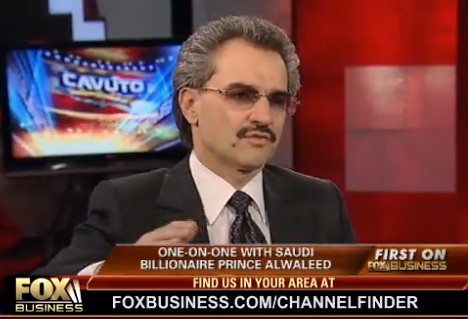
FOX News seems hyper-focused on middle eastern wars and pro-fossil fuel, climate change denier topics. This can be seen as a conflict of interest by the news organization who is partially owned by a Saudi prince oil baron (e.g. dismissive of global warming science that discourages oil use, actively encourages American support of Saudi political interests) with nary a word about the country’s list of human rights violations.


Less controversial than FOX's problems, but still an ugly design sin to me is DMN’s odd use of font sizes. Randomly huge fonts are distracting and limit the number of story options seen on the monitor at one time. The other problem is that after being bought out, there are less staff reporters since the layoffs. This shrinking staff is a con and limits the amount of original content about local topics being generated by this branch location, worse it limits the number of proofreaders on staff.

I do find it likable that FOX offers a dissenting opinion. I like that the organization’s daring legal teams that keeps challenging the legal status quo and blurring the line between non-fictional news and fictional entertainment. 

Just like TheOnion.com can make up stories legally, so can any other media outlet. In a case where FOX News was sued by one of its ex-reporters, Jane Akre. "The Florida Appeals court claimed that the FCC policy against falsification of the news does not rise to the level of a “law, rule, or regulation,” it was simply a “policy.” Therefore, it is up to the station whether or not it wants to report honestly. During their appeal, FOX asserted that there are no written rules against distorting news in the media. They argued that, under the First Amendment, broadcasters have the right to lie or deliberately distort news reports on public airwaves. Fox attorneys did not dispute Akre’s claim that they pressured her to broadcast a false story, they simply maintained that it was their right to do so."

Luckily, my local newspaper has not been sued for making things up. Dallas has that going for it. I also like that DMN still prints the neighborhood crime blotters in the Metropolitan section in a completely factual, non-biased way without editorial comment.  Plus, since being bought out, they now allowing you to read their articles for free without a subscription.


The two things I most dislike about FOX is the heavy owner bias, and frequency of stories that turn out not to be factual. To be fair, any journalist might sometimes get a fact mixed up. But the number of retractions when they do make mistakes is glossed over.  I feel that its conservative owners (Rupert Murdoch’s News Media Corps and a Saudi oil tycoon named Prince Alwaleed Bin Talal) encourage bias, and frequently offers un-factchecked information. The prince has even appeared on the news channel as a pundit. This makes claims that the prince doesn't influence the material being broadcast on the channel pretty unbelievable. A reputable new organization would have thrown a red flag on that play as an obvious conflict of interest and not used one of their owners on camera.


On the other hand, I really don’t like that DMN is no longer privately owned (I guess it depends on who the owners are). DallasNews.com is now part of Gannett Corporation and has slowly gotten away from the mission of the original founder. Dallas newsman, Belo believed in unbiased reporting and his inspiring quote can be seen pictured below carved in huge justified text). DMN has become preoccupied with advertising to the point that entire sections are devoted to what basically translates as native advertising. Most concerning, DMN just fired over half of their long time reporters, which means there are now less paid watchdogs in my city.


Bottom line, Dallas Morning News is a “better” news site for three reasons. It offers local news that is more relative to me as a resident, has staff that fact checks national stories for credibility, and actively avoids stories with conflicts of interest.

In a news age where Starlets can buy twitter followers for $59 per 100 accounts to artificially influence “trending” algorithms and influence their popularity. This oil monarch is using the same business model to influence public opinions by holding partial ownership in a “news” organization that encourages American involvement in wars in their region to benefit their interests.

Dallas may have slowly become more conservative in its reporting, but it still offers both sides a voice in local and national stories. This is in stark contrast to the partisan politics heralded on FOX News. All Managing Editors must choose carefully when deciding what stories are "fit to print"  because it reflects on the integrity of them as a respectable source.

Sunday, September 20, 2015

Make your Life Easier with Hacks off Youtube

Want to feel smarter than the average bear?  The CrazyRussianHacker youtube channel gives you practical ways to use everyday objects to make your life a little simpler. Get a whole new perspective on everything from recharging your phone with a gum wrapper, to a better way of getting chips out of the bag.  What's his channel about? How is it different from mainstream? Why do I like it & what do I think made it successful? Read on to find out & check out of a few of my favorite videos at the end of this blog.


1.  Clips are about “life-hacks” and practical ways to re-purpose household items to do more useful things. 28 year old Russian videoblogger, Taras Kulakov (he actually lives in Asheville, NC but he was born and raised in the U.S.S.R.), teaches DIY ways to feel more like MacGyver in simple terms.

2.  This youtuber’s content is different from mainstream content because it has low production values and is shot in the person’s home. It doesn’t use background music and has minimal graphics compared to other channels. There is typically only one camera setup and he normally is both cast & crew with no helpers.

3.  I like this channel because unlike many mainstream channels, it focuses on egalitarian usefulness that the “everyman” can DIY, instead of focusing on conspicuous consumption such as channels focusing on makeup tips, product “hauls” and endless walk-throughs of the newest video game releases. CrazyRussianHacker has likely appeal for a broader geographic group of viewers. I would rather spend time watching a DIY channel than other more superficial topics.

4.  Factors that contributed to this youtuber’s over 5 million subscribers include: personality, intelligence, and viewer calls-to-action. He makes requests every so many episodes that encourage the viewer to subscribe, comment on specific parts of the video, and to give a thumbs-up when a project blows your mind and can be seen succeeding. I do not believe this guy would have been given a chance on mainstream media. Casting directors look for superficial over substance. In his Q&A video, he says the key to having so many subscribers has been practice, money on lighting and technology to make the videos with, and he “just loves science.”

10 DIY hacks for Back-to-School:

Water bottle hacks video:

10 Survival Life Hacks video:

10 Life Hacks for College Students:

Q&A with the vblogger includes inspirations & personal info:


Monday, September 7, 2015

Writing Eye-catching Tweets vs. Tweets that get Scrolled by

Let’s take a moment to talk about Twitter. What started as the first social media to utilize text messages in the pre-smart phone world has now become a hot bed of first person accounts and the freshest news in town. How does a person determine what goes into a tweet that makes it engaging and click worthy? I’m going to share 3 examples of tweets that caught my eye and 3 tweets that I was quick to scroll on by.


What kind of posts worked for me on twitter?
  1. I retweeted @angelamlee’s post from University of Pennsylvania about the data research involved in Netflix’s original programming production choices. Netflix probably has extensive statistical data based on user viewing habits and being smart by evaluating those numbers when making production choices instead of just going on individual producer biases like in Hollywood’s past will influence more popular programming.  Considering that Netflix won 31 Emmys at the 2014 awards, their number crunching seems to be working and creating critically acclaimed and much marathoned programming. This tweet drew my attention because it featured hard numbers about a typically subjective and biased topic of what makes a good tv show. 
  2. I favorited @agarza321’s post about getting involved with UTDTV. Her tweet drew my attention because that is a useful extracurricular to be involved in as an EMAC major. Video is definitely an influential and powerful communication tool. 
  3. I favorited @kg14503’s post from NASA about the moon that orbits around Pluto. So glad it is a planet again instead of just Mickey Mouse’s pet dog. This tweet drew my attention because it featured a video explaining the phenomenon and it is about science which I love. I did not realize that Pluto’s moon is called Charon, which in myth was the ferryman on the River Styx. Charon is a very fitting name for something that orbits a planet named for the ruler of the underworld  

What didn’t work?
  1. The sponsored tweet did not appeal to me because I have no need for CRM tools for customer relationship management. I feel that my newbie status on twitter led the system to feed me an ad not related to my interests because I have not fed enough interests or posts in the system yet for it to us to gauge my demographic accurately. The photo in this tweet is very generic and does not tell you anything about their product. 
  2. The tweet from @nytimes used phrasing that felt unnecessarily like click-bait. It was overly sentimental and probably geared for a more vegetarian reader. Texas is full of hunters who are willing to look their next meal in the eye. 
  3. I did not favorite the tweet from @dallasnews about the car accident and man failing to stop and render aid to the victims. It was not a happy story and I like to retweet things that are educational or uplifting. I avoid posting anything with images that exploit violence, hate or suffering. 
Basically, I found tweets more attractive when they featured:
  • Facts and statistical evidence with source data clearly linked. This makes fact checking science and political articles easier.
  • Life events from people I know personally about their inspirations, personal hobbies and real world activities. I find these kinds of update posts to be more interesting than just the re-posting of memes.
  • Visual aids like videos and charts grab the eye more than plain text posts, and are another great fact-checking aid that gives tweets credibility.


If found myself repelled by tweets with the following characteristics:
  • Ads and sponsored tweets that try to sell me things.
  • Click-bait style wording that tries to hook the reader by using polarizing or divisive language in attempts to overgeneralize its audience’s demographic.
  • Images that exploit or try to hook the reader using shock tactics that desensitize readers to images of death, destruction and violence.


I am still learning about what my tweeting style sounds like by sharing things I find interesting and retweeting posts that I think my followers will find useful or uplifting. It will be interesting to see how my feed changes as more things are favorited and more accounts are followed online. I am excited that my twitter feed will look very different at the end of the semester. 

Keep checking back to this blog to read all about my writing evolution online.